
Davi Kinski
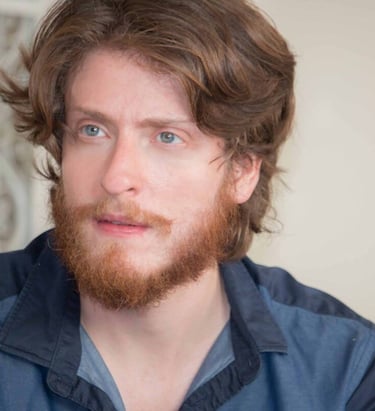
Davi Kinski works in theater, film, and literature. A graduate of the International Film Academy, he has directed seven short films, including "Cineminha," which has won awards and been screened at festivals in Italy and the USA. His first feature-length documentary, "Poemaria," won first place with the São Paulo State Culture Secretariat Award in 2024 for its completion. This film premiered worldwide at the 52nd Gramado Film Festival in 2024 in the competitive documentary feature section. It won "Best International Documentary" at the TIFA (Tietê Film Awards) festival, Best Film at the Cinema and Transcendence Festival, an Honorable Mention at the Santos Film Festival, and participated in more than 10 festivals, including international ones, in 2025. Also in November 2025, he released as director the short film "Alice, Five Minutes Before Sunset," which has already been selected for its US premiere at the Culver City Festival in Hollywood, and has also won "Best International Short Film" at the Tamizhagam Festival in India.
12/9/20254 min read
1. What initially inspired the story behind your latest film?
Poemaria was born from my fascination with how poetry cuts through everyday life. I’ve always been deeply moved by Eduardo Coutinho’s approach — that radical form of listening capable of revealing the human within the human.
I wanted to create a film that merged performance and testimony, poetry and daily existence, art and vulnerability. The project began with a simple but profound question:
What happens when we truly listen to someone?
2. Can you tell us about your creative process — from the first idea to the finished film?
The process began with intense research: psychoanalysis, interview methodologies, the ethics of listening. Then came the creation of the device: a deeply intimate studio, nighttime shoots, a minimal crew, shared dinners, conversations that stretched long before the camera started rolling.
The idea was to let the testimony emerge from coexistence, not from rigid prompts. It took nine years to reach the final cut.
The film was shaped by the encounter itself, not by control.
3. How did you develop the visual style and tone of the project?
The visual style comes directly from the film’s ethics: intimacy, simplicity, trust.
I wanted a patient camera, one that never intimidated, and lighting that evoked a sense of confession. Nothing overly polished or distancing.
The tone grows out of the listening: human, deep, direct.
The entire film is structured around the word — and the image respectfully follows it.
4. What were some of the biggest challenges you faced during production, and how did you overcome them?
Making an independent film in Brazil is, by itself, a major obstacle. Limited resources, long pauses between stages, logistical constraints, financial instability.
We overcame these challenges through insistence, a dedicated and compact team, and a constant search for handcrafted solutions.
Each difficulty eventually became part of the film’s aesthetic.
5. Was there a particular scene or moment that was especially difficult — or rewarding — to film?
Adélia Prado’s testimony.
It was challenging due to the responsibility, and transformative due to its intensity.
She articulated, with rare poetic clarity, something that is usually impossible to verbalize — the nature of poetry and the act of creating it. For me, it became one of the defining moments of the film and of my artistic life. Many viewers have shared that it had the same effect on them.
6. How did you approach casting and working with the people on screen to bring the film to life?
Even though the film includes actors and actresses, our focus was never on their artistic personas. We wanted to explore who they were as human beings.
We also interviewed doctors, politicians, poets, homemakers — a real plurality of voices.
The greatest challenge was inviting all of them to recite poetry on camera, something that requires intimacy and trust.
This led me to develop individualized directing methods for each participant. There is no single path to access someone’s inner world.
7. Independent filmmaking often requires creativity — what compromises or inventive solutions did you have to make?
Nearly all of them.
A minimal crew, a single location, many roles combined, and aesthetic decisions shaped by budget constraints.
But these limitations ultimately defined the film.
Sometimes restriction is what gives a film its language.
8. How did you begin filmmaking? Was there a moment you knew this was your path?
I began in theater and literature — the body and the word. Cinema emerged later as a natural extension of these two worlds.
There was a moment, still young, sitting in a dark cinema, when I realized the image had the power to transform whatever was happening inside me.
From that point on, I knew cinema would be part of my path.
9. Which filmmakers or films have most influenced your work?
Eduardo Coutinho, without question — for his ethics and his radical listening.
Almodóvar and Truffaut for their intimate gaze.
And Pier Paolo Pasolini, for the fusion of poetry, politics, and image — a subject I have even published a book about in Brazil.
10. How do your personal experiences influence the stories you choose to tell?
Coming from literature, I’ve developed a sensitivity to everyday gestures, to silence, to the delicate, intimate places people often overlook.
My films grow from personal concerns that inevitably resonate collectively.
They are attempts to understand the world, and also to make it more livable.
11. In your opinion, what makes independent cinema unique or essential today?
Freedom.
Independent cinema is one of the few spaces left where it’s still possible to take risks, experiment, embrace complexity, and confront uncomfortable truths.
In a world full of conflict and oversimplification, independent cinema remains a refuge for humanity and depth.
12. How did this project transform you as a filmmaker or storyteller?
Poemaria taught me to remove excess.
I learned that listening is as powerful a cinematic tool as the camera itself.
I leave this film both more rigorous and more open to chance — and to the encounter.
13. What lessons from this film will you carry into your next project?
The main one: simplicity is strength.
And that truth only appears when time, space, and trust are present.
Human processes can’t be rushed.
14. Can you share any details about your next project?
I intend to expand Poemaria into a documentary series focused on contemporary writers and poets.
Alongside that, I’m also developing fiction projects, which are growing in parallel to the film’s international circulation.
15. Lastly, what advice would you give to emerging filmmakers trying to tell their stories independently?
Resist.
Independent filmmaking — in Brazil and worldwide — is a daily act of courage.
Don’t wait for ideal conditions; they won’t come.
Start with what you have, define your device, protect your vision, and persist.
Persistence is part of the aesthetic.